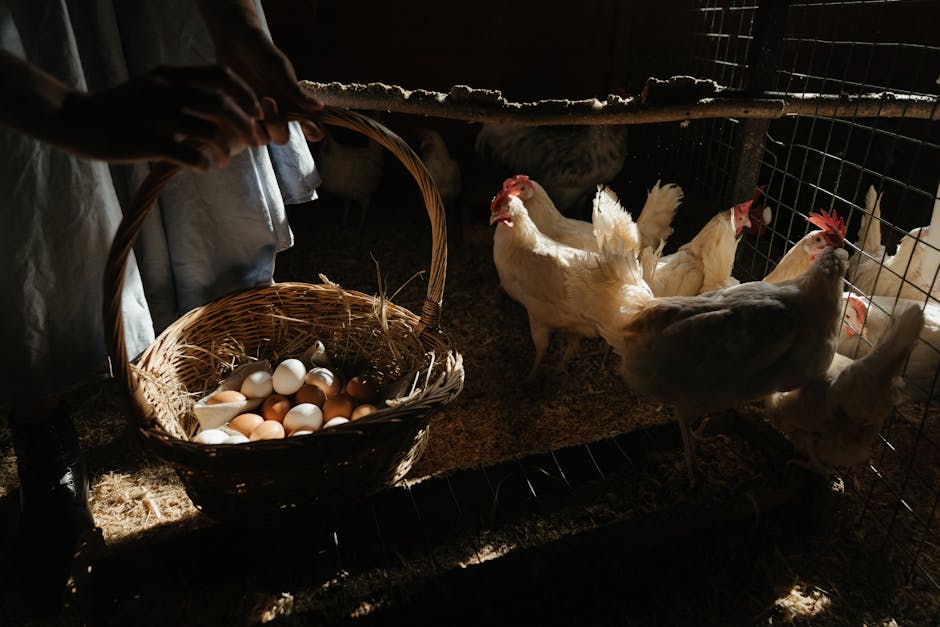
Whether you have a rooster in your flock or are considering adding one, understanding the difference between fertilized and unfertilized eggs clears up some of the most common misconceptions in backyard chicken keeping. Most importantly: fertilized eggs are completely safe to eat, taste identical to unfertilized eggs, and show no meaningful nutritional difference. The only practical difference is that fertilized eggs can develop into chicks if properly incubated.
Quick Facts
| Visible Difference | Only when cracked open — ‘bullseye’ blastodisk in fertilized eggs |
| Taste Difference | None — fertilized eggs taste identical to unfertilized |
| Nutritional Difference | Negligible — no meaningful nutritional advantage |
| Safe to Eat? | Yes — fertilized eggs are completely safe, same as any egg |
| Development | Only begins with sustained warmth (99°F+) — not in a refrigerator |
| Requires | A rooster in the flock for fertilization |
How to Tell the Difference
The only reliable way to tell a fertilized egg from an unfertilized one is to crack it open and look at the yolk. In a fertilized egg, you’ll see a small white disc on the yolk surface called the blastodisk (or blastodisc) — a small bullseye-like ring of white, roughly 3–4mm in diameter, with a lighter center and slightly darker ring around it. In an unfertilized egg, the same white disc appears but is irregular in shape without the distinct ring structure. This distinction requires a trained eye and reasonable lighting to observe reliably.
Candling an uncracked egg — holding it up to a bright light in a dark room — does not reveal fertility unless the egg has been incubated for 5–7 days and is showing embryonic development. A freshly collected fertile egg looks identical to an infertile egg when candled.
Safety and Eating Quality
Fertilized eggs are completely safe to eat at any stage of development, provided they have been properly refrigerated. Refrigeration below 40°F halts any embryonic development — a fertilized egg stored in the refrigerator immediately after collection will never develop further and is indistinguishable from an unfertilized egg in every practical way.
The taste is identical. Nutrition is essentially identical — some studies have found very minor differences in certain fatty acid profiles between fertilized and unfertilized eggs from the same hens, but nothing meaningful for human nutrition. Any egg quality differences you observe between flocks with and without roosters are due to other factors (hen health, diet, age, breed) rather than fertilization status.
Practical Implications for Your Flock
If you keep a rooster, all your eggs are fertilized. This requires no special handling — collect them daily, refrigerate promptly, and use or sell them as you would any egg. If you incubate your own eggs, collect them as fresh as possible (within 7 days) from your fertile flock and store properly until ready to set. If you don’t want fertilized eggs but enjoy having a rooster for flock management and predator warning, simply collect eggs daily and refrigerate — there’s no practical concern.
The ethical and ‘stage of development’ question: a freshly collected fertile egg contains only a few cells at the blastodisk stage — there is no embryo, no nervous system, no development. Development only begins with sustained incubation at 99°F+. A refrigerated fertile egg is biologically arrested at the same state as collection.
Frequently Asked Questions
Can you eat a fertilized egg that was sat on by a hen?
Eggs that have been under a broody hen for 24 hours or less are generally still safe to eat if refrigerated promptly — development in the first 24 hours is minimal. Eggs that have been incubated for several days are developing embryos and are not typically eaten in Western cultures, though partially incubated eggs (balut) are consumed in some Asian cuisines.
Does having a rooster affect egg production?
No — the presence or absence of a rooster does not affect how many eggs hens lay. Hens lay the same number of eggs with or without a rooster. Fertilization happens at mating, not at laying — eggs are produced on the same 24–26 hour cycle regardless of whether a rooster is present.
How can you tell if an egg is fertile before incubating?
You cannot reliably tell if an egg is fertile before incubating without cracking it open and identifying the blastodisk. Even then, the bullseye pattern is subtle and not obvious to untrained eyes. The most reliable approach: collect eggs from a flock with an active, healthy rooster and assume fertility. Confirm by candling at day 7 of incubation.
Are fertilized eggs better for you?
No meaningful nutritional difference has been established between fertilized and unfertilized eggs of equivalent quality. Marketing claims of superior nutrition for fertilized eggs are not supported by scientific evidence. Egg quality is determined by the hen’s diet, health, age, and breed — not by fertilization status.
Do roosters need to mate with every hen to fertilize all eggs?
Not every day — a rooster’s sperm can remain viable in a hen’s reproductive tract for 7–10 days after a single mating, fertilizing multiple consecutive eggs. An attentive rooster in a flock of 8–10 hens will typically maintain fertility in all hens with normal mating activity. A hen to rooster ratio of 8–12:1 is generally recommended to ensure fertility without over-mating stress.
From Our Community
Q: How do I know if my eggs are fertile?
A: Candle them at day 7 — fertile eggs show a network of veins and a dark spot (the embryo). Infertile eggs remain clear.
Q: My hen stopped laying suddenly — what do I check first?
A: Day length (less than 14 hours triggers a stop), stress, molting, age, illness, and diet. Most sudden stops have an environmental cause that can be corrected.
This post contains affiliate links. As an Amazon Associate I earn from qualifying purchases at no extra cost to you.
Upgrade your coop setup with the right gear. Shop coop accessories on Amazon — nesting boxes, roost bars, heat lamps, and more.