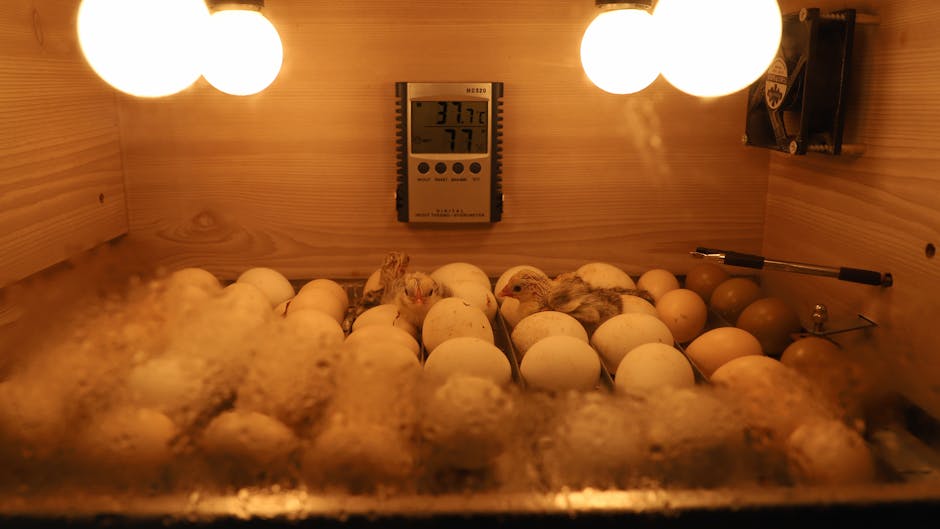
Hatching your own chicks from fertile eggs is one of the most rewarding experiences in chicken keeping — watching a fully formed chick pip, zip, and emerge from a shell is genuinely magical. But successful hatching requires precise management of temperature, humidity, and turning throughout the 21-day incubation period. This step-by-step guide covers everything from egg selection and incubator setup through lockdown, hatch, and moving chicks to the brooder.
Quick Facts
| Incubation Period | 21 days for standard chickens |
| Temperature | 99.5°F (37.5°C) forced air; 101–102°F still air |
| Humidity | 45–55% days 1–18; raise to 65–70% at lockdown (day 18) |
| Turning | 3–5 times daily (or automatic turner) — stop at day 18 |
| Candling | Day 7 and day 14 to check development |
| Hatch Window | Most chicks hatch days 20–22 |
Setting Up the Incubator
Start the incubator 24–48 hours before adding eggs to allow temperature and humidity to stabilize. The target temperature for forced-air incubators (with a fan) is 99.5°F (37.5°C) measured at egg level. Still-air incubators (no fan) run slightly hotter at the top where the thermometer sits — target 101–102°F measured at the top of the eggs. Temperature fluctuations of even 1°F sustained for hours can reduce hatch rates significantly; verify with a calibrated thermometer, not just the built-in display.
Humidity for days 1–18 should be 45–55% relative humidity. This allows the air cell in the egg to develop to the correct size for hatching. The specific humidity target matters less than avoiding extremes — below 35% causes excessive air cell development and embryo dehydration; above 65% restricts air cell growth and can drown chicks during hatch. A hygrometer inside the incubator is essential; built-in humidity displays are often inaccurate.
The Incubation Period: Days 1–18
Eggs should be turned a minimum of 3 times per day — an odd number of turns so the egg doesn’t rest on the same side each night. Automatic turners that roll eggs continuously are more convenient and slightly improve hatch rates over manual turning. Mark eggs with an X on one side and O on the other if turning manually so you can track that each egg is being turned. Stop turning at day 18 (lockdown).
Candle eggs at day 7 to check for development: a fertile, developing egg shows a network of blood vessels radiating from a dark center (the embryo) when held against a bright light in a dark room. Infertile eggs (‘clears’) remain translucent. Remove clears at this point — decomposing eggs can explode and contaminate the incubator. Candle again at day 14: fertile eggs should be mostly dark with only the air cell visible at the wide end.
Lockdown and Hatch (Days 18–21)
At day 18, stop turning, raise humidity to 65–70%, and don’t open the incubator again until hatch is complete. This is ‘lockdown.’ The chicks are repositioning into hatching position; disturbance at this stage, especially humidity loss from opening the incubator, is one of the most common causes of stuck chicks (‘shrink wrapping’ — the membrane dries onto the chick).
Most chicks pip (break through the shell) on day 20 and hatch on day 21. Pip to hatch typically takes 12–24 hours. Do not assist chicks that are pipping unless it’s been more than 24 hours with no progress and you have experience with assisted hatching — premature assistance kills more chicks than it saves. Allow the hatch to complete before removing chicks; leave them in the incubator for 12–24 hours after hatching as they dry and fluff. Move to a prepared brooder when fluffy and steady on their feet.
Frequently Asked Questions
What temperature kills chicken eggs?
Sustained temperatures above 104°F (40°C) kill embryos within hours. Brief spikes to 103°F during hatch are less harmful than sustained elevated temperatures earlier in incubation. Temperatures below 96°F sustained for more than a few hours also damage development. The optimal range is 99–100.5°F for forced-air incubators.
Why are my eggs not hatching?
The most common causes: infertile eggs (no rooster or infertile rooster), incorrect temperature (too high or too low), incorrect humidity (too low causes shrink-wrapping; too high causes drowning), inadequate turning, old eggs (hatchability declines sharply after 7–10 days of storage), and disease in the parent flock. Candle at day 7 to confirm development before assuming a hatch failure.
Can I open the incubator during lockdown?
Minimize opening during lockdown (days 18–21). Each opening drops humidity and can cause membrane desiccation (shrink-wrapping) in chicks that are pipping. If you must add water to maintain humidity, use a syringe through a vent hole rather than opening the lid. After all chicks have hatched and are dry, it’s safe to open and move them to the brooder.
How long can hatching eggs be stored before incubating?
Hatchability begins declining after 7 days of storage and drops significantly after 10 days. Store eggs pointed end down at 55–65°F (not refrigerator temperature) with 70–75% humidity. Turn stored eggs daily to prevent the yolk from settling against the shell membrane. For best results, incubate within 7 days of collection.
Do I need a rooster to hatch eggs?
Yes — only fertilized eggs can develop into chicks. Fertilization requires a rooster. Grocery store eggs and eggs from rooster-free flocks are infertile and will never hatch regardless of incubation. Collect hatching eggs from your own fertile flock or purchase them from a breeder. A rooster can fertilize eggs for 7–10 days after a single mating.
From Our Community
Q: How do I know if my eggs are fertile?
A: Candle them at day 7 — fertile eggs show a network of veins and a dark spot (the embryo). Infertile eggs remain clear.
Q: My hen stopped laying suddenly — what do I check first?
A: Day length (less than 14 hours triggers a stop), stress, molting, age, illness, and diet. Most sudden stops have an environmental cause that can be corrected.
This post contains affiliate links. As an Amazon Associate I earn from qualifying purchases at no extra cost to you.
Fresh, clean water is essential for a healthy flock. Shop chicken waterers on Amazon — from simple galvanized to automatic nipple systems.
Upgrade your coop setup with the right gear. Shop coop accessories on Amazon — nesting boxes, roost bars, heat lamps, and more.