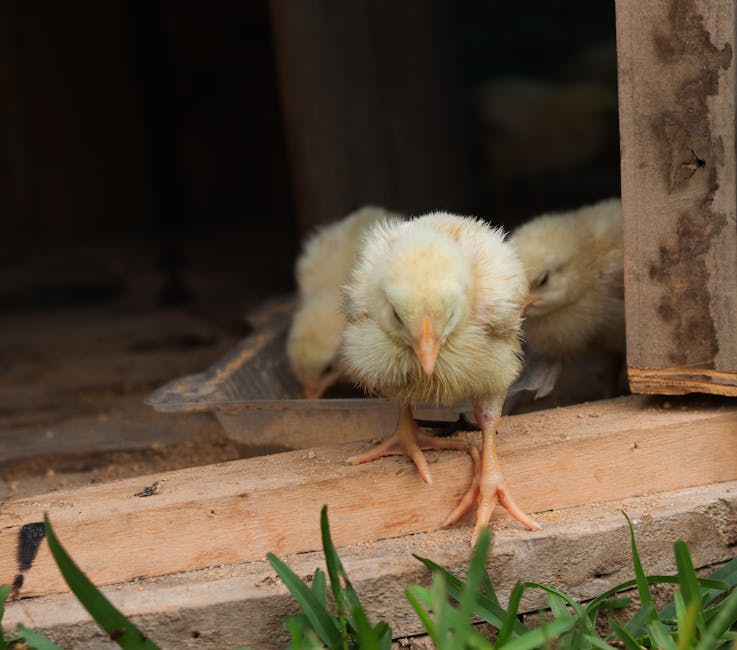
The transition from brooder to outdoor coop is one of the most stressful points in a young chicken’s life — and one where many keepers move too fast and lose birds to cold, predators, or bullying from existing flocks. Getting the timing and method right makes the difference between a smooth transition and a setback. This guide covers exactly when chicks are ready, how to prepare, and how to manage the first days and weeks outdoors.
Quick Facts
| Minimum Age | 6 weeks for fully feathered standard breeds |
| Temperature | Night temps consistently above 50°F without supplemental heat |
| Feathering | Must be fully feathered — no remaining down patches |
| New Flock | 2–4 weeks visual separation before mixing with adult birds |
| Predator Check | Inspect coop thoroughly before first night — no gaps over ½ inch |
| First Night | Check at dusk to ensure chicks found the roost |
Is Your Chick Ready? The Three Checks
Check 1 — Feathering: Run your hand through the chick’s feathers. If you feel down (soft fluffy undercoat) anywhere on the body — particularly on the back, chest, or between wing and body — the chick is not fully feathered and is not ready for outdoor temperatures without supplemental heat. Fully feathered chicks feel like adult birds when you ruffle through their feathers — all feathers, no down. For standard breeds this is typically 6–8 weeks; bantams sometimes take longer.
Check 2 — Temperature: Verify that outdoor nighttime temperatures are consistently above 50°F before making the permanent move without heat. A single cold night below 40°F can kill young birds that have never experienced cold before. If nighttime temps are borderline, provide a heat lamp in one corner of the coop for the first week as a warm refuge. Check 3 — Coop security: Inspect the coop as if you were a predator. Look for gaps larger than ½ inch in walls, floors, or roofing. Check all latches. Verify the pop door closes fully and latches securely. Make this inspection before, not after, the first night outside.
The Transition Method
Don’t move chicks directly from a 75°F brooder to a 55°F nighttime coop in one step. Spend 1–2 weeks hardening off: on warm days above 65°F, give chicks supervised access to an outdoor area for progressively longer periods, returning them to the brooder at night. This gradual acclimatization prevents the shock of sudden temperature change and allows immune system exposure to outdoor pathogens.
Move chicks to the permanent coop on a mild evening, placing them directly on the roost bars after dark. Birds settle easily at night and wake up in the new space as if they’ve always been there. Check at dawn on the first morning — are all chicks active, eating, and exploring? A chick huddled in a corner alone may be too cold or injured.
Integrating with an Adult Flock
If you’re adding young birds to an established flock, do not simply open the door between them. The adult birds will attack newcomers, and young birds can be seriously injured or killed. The see-but-can’t-touch method works: install a wire partition in the coop or run that allows all birds to see, hear, and smell each other for 2–4 weeks. When direct integration happens, supervise for the first several hours.
Integration is safer when chicks are larger — 12–16 weeks is much better than 8 weeks despite the longer separation period. The size differential at 8 weeks makes young birds much more vulnerable. Adding multiple young birds at once rather than one or two distributes the aggression from the established flock rather than concentrating it on a single target.
Frequently Asked Questions
Can I move chicks outside at 4 weeks?
Only in warm weather (consistent nighttime temps above 70°F) and only if chicks are largely feathered. At 4 weeks most standard breeds are partially feathered but still have significant down. A 4-week-old chick in a safe, warm outdoor environment can begin spending daytime hours outside but should return to a heated brooder overnight until fully feathered.
What if my chicks won’t go inside the coop at night?
Young birds have no instinct for a specific coop — they need to learn it’s home. For the first week, physically place them inside the coop at dusk each evening. Within 5–7 days, most learn to return on their own. A light inside the coop at dusk (on a timer to go off after they’re settled) also draws them in.
How cold is too cold for fully feathered chicks?
Fully feathered 8-week-old standard breed chicks can tolerate temperatures down to about 40°F comfortably. Below 35°F, supplemental heat is advisable. In practice, a group of healthy feathered chicks sharing body heat in a draft-free coop can handle temperatures somewhat colder than a single bird alone — flock heat generation is significant.
My chicks keep escaping the run — what do I do?
Young, light chicks are often capable of flying over lower run fences that confine adult birds. Ensure the run is fully covered (hawk netting or hardware cloth overhead), or clip flight feathers on one wing (unbalances flight without harming the bird). Most chicks settle down and stop trying to escape as they grow heavier and more comfortable with their territory.
How do I know if chick integration is going badly?
Warning signs: a chick being cornered repeatedly and unable to escape, blood being drawn, a chick being excluded from food and water entirely, or a chick losing significant weight rapidly. Normal integration includes chasing, minor pecking, and the new birds being at the bottom of the pecking order — these are expected. Sustained attacks drawing blood require separation.
From Our Community
Q: My chicks keep piling on each other — is that normal?
A: Piling means they’re cold. Raise the heat source or lower it closer to the brooder floor. Comfortable chicks spread out and move around freely.
Q: When is it safe to put chicks with adult hens?
A: Wait until chicks are fully feathered (6–8 weeks) and as close to adult size as possible before integration. A see-but-can’t-touch separation period first dramatically reduces injury.
This post contains affiliate links. As an Amazon Associate I earn from qualifying purchases at no extra cost to you.
Keep your flock happy and healthy with high-quality treats. Shop chicken treats on Amazon — dried mealworms, scratch grains, and more.
Fresh, clean water is essential for a healthy flock. Shop chicken waterers on Amazon — from simple galvanized to automatic nipple systems.
Upgrade your coop setup with the right gear. Shop coop accessories on Amazon — nesting boxes, roost bars, heat lamps, and more.
Related: what to feed baby chicks | raising baby chicks guide